
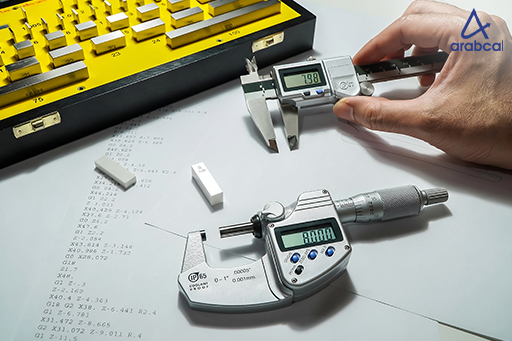
Mistakes to Avoid When Choosing the Best Calibration Companies in Qatar
In industries where accuracy defines safety, compliance, and profitability, calibration is never a routine checkbox; it is a critical process that safeguards reliability and operational integrity. Every pressure gauge, temperature sensor, flow meter, or electrical instrument plays a direct role in operational decisions. Choosing the wrong calibration partner can quietly introduce risk- misleading data, audit failures, production losses, and even safety incidents.With many calibration companies operating in the market, selecting the right one requires more than comparing prices or turnaround time. This article highlights the most common mistakes organisations make when selecting calibration companies in Qatar and explains how to avoid them through informed, practical decision-making.
Why Calibration Matters
- Calibration ensures instruments measure reliably and traceably to national or international standards; when this is missing, measurement errors cascade into wrong decisions.
- In regulated or safety-critical industries (oil & gas, aviation, healthcare, pharmaceuticals, transport) an accredited calibration certificate is often a contractual or regulatory requirement.
- Local availability of accredited labs reduces downtime (onsite options vs shipping instruments abroad) and lowers logistic risk. Arabcal offers both in-lab and on-site calibration in Qatar.
Common Mistakes Made When Selecting Calibration Companies in Qatar

Choosing Based on Price Instead of Technical Competence
One of the most frequent mistakes is selecting a calibration company solely because they offer the lowest quotation. While cost control is important, calibration quality cannot be judged by price alone.
Low-cost calibration often comes with compromises:
- Limited or outdated reference standards
- Inadequate environmental control during calibration
- Insufficient documentation
- Lack of traceability to recognised standards
In regulated and safety-critical environments, these calibration compromises can result in invalid calibration certificates that fail internal reviews or external audits. A reliable calibration company invests heavily in master instruments, controlled laboratories, skilled engineers, and quality systems. These factors inevitably influence pricing, but they also protect the integrity of measurement results.
What to do instead:
Evaluate value, not just cost. Confirm the company’s technical capability, laboratory setup, reference equipment, and competence in handling instruments similar to yours.
Not Verifying ISO/IEC 17025 Accreditation Scope
Many organisations assume that if a company claims ISO/IEC 17025 accreditation, all its calibration services are covered. This assumption is risky.Accreditation applies only to specific parameters, ranges, and methods listed in the company’s scope of accreditation. A calibration company may be accredited for temperature and pressure but not for torque, RF, or high-voltage measurements. Using an accredited lab outside its approved scope can invalidate calibration results.
What to do instead:
Always request the accreditation scope and verify that:
- The required measurement parameter is included
- The operating range matches your instrument
- The uncertainty level is suitable for your application
At Arabcal Icon Technical Solutions WLL, accredited laboratory capabilities and measurement ranges are clearly specified, allowing clients to make well-informed calibration decisions.
Overlooking Measurement Uncertainty and Traceability
A calibration certificate without meaningful uncertainty values is incomplete. Measurement uncertainty defines how reliable a result is and whether it meets the tolerance required for operational use.
Ignoring uncertainty can lead to:
- Instruments passing calibration but failing in real operation
- Inconsistent readings between departments or sites
- Disputes during audits or client inspections
Traceability is equally important. Calibration results must be traceable to recognised national or international standards through an unbroken chain of comparisons.
What to do instead: Review sample calibration certificates before finalising a provider. Ensure each certificate clearly states:- Measurement uncertainty
- Reference standards used
- Traceability information
- Environmental conditions during calibration
Choosing a Provider Without Relevant Industry Experience
Calibration requirements vary significantly across industries. An approach suitable for general manufacturing may not meet the expectations of oil & gas, aviation, marine, healthcare, or power sectors.
A provider unfamiliar with industry-specific requirements may:
- Use inappropriate calibration methods
- Miss critical safety or compliance parameters
- Fail to align with site permit and access protocols /li>
- Industry case studies
- Sector-specific procedures
- Engineers trained for complex or hazardous environments
Experienced providers understand not just the instrument, but the context in which it operates.
Ignoring On-Site Calibration Capabilities
Sending instruments off-site for calibration is not always practical. Large, fixed, or critical instruments often require on-site calibration to avoid extended downtime.
A lack of on-site capability can lead to:
- Production interruptions
- Increased logistics risk
- Delays in recommissioning equipment
- Qualified field engineers
- Portable reference standards
- Compliance with site safety requirements
A strong calibration company should offer both laboratory and on-site services depending on operational needs.
Accepting Poor Documentation and Reporting Standards
Calibration is not complete until results are properly documented. Poor-quality reports create long-term problems, especially during audits or system reviews.
Common documentation issues include:
- Missing uncertainty data
- Unclear pass/fail statements
- Inconsistent certificate formats
- Lack of instrument identification
- Clear, standardised calibration certificates
- Electronic records for easy retrieval
- Asset tagging and next-due-date identification
Digital certificate management and structured reporting significantly improve compliance and audit readiness.
Not Considering Long-Term Calibration Management
Calibration is not a one-time activity. Instruments require ongoing monitoring, scheduling, and performance trending.
Choosing a calibration company without long-term support can result in:
- Missed calibration due dates
- Disorganised asset records
- Reactive rather than preventive maintenance
Other Frequent Pitfalls
- Not validating repair vs calibration: Repairs change instrument behaviour; always re-calibrate after any repair.
- Not checking environmental conditions used during calibration: Temperature/humidity in the lab matters for sensitive instruments.
- Blindly trusting “manufacturer authorised”: Manufacturer-authorised centers are useful, but authorisation ≠ accreditation; check both.
- Failing to qualify subcontracting: If a lab subcontracts some calibrations, ensure the subcontractor’s competence and traceability are documented.
- Ignoring sample size for fleet calibrations: For many similar devices, ask for a statistical approach (rotational sampling, automation) to control cost without losing confidence.
What to Ask When You Contact Calibration Companies in Qatar
- Are you ISO/IEC 17025 accredited? Ask for the scope and the accreditation certificate number. (Don’t accept a generic “we’re accredited”)
- Which instruments and ranges are covered in your scope? (e.g., pressure 0–600 bar, torque up to 10,000 Nm, temperature – 40 to 500°C.)
- Can you perform on-site calibration at our site (do you have Qatari on-site teams)? Get SLA for response time.
- What is the measurement uncertainty and traceability chain for our critical instruments? Obtain sample certificates.
- Do you provide electronic certificates and API/CSV export for integration with our CMMS? Ask for format examples
- What are your turnaround and expedited service options? (Express onsite vs routine lab turnaround.)
- Do you subcontract? If yes, get the subcontractor’s accreditation and scope.
Real Signals to validate a provider – what to check online
- Accreditation registry listing: Search accreditation bodies or regional listings to confirm certificates. Don’t rely only on PDFs posted on the vendor site
- Named lab capabilities: Providers that document specific labs (torque, RF, high-voltage) and list master equipment show deeper investment.
- Client sectors and case studies: Review industry-specific case studies such as oil & gas, marine, or aviation to assess relevant experience. Big providers often publish case studies showing methodology, turnaround and outcomes
- Local office & contact: Confirm a working Qatar phone number, local address and response times; international companies without local presence may be slower.
How to Evaluate Calibration Companies Effectively
 Selecting calibration companies in Qatar should be a structured evaluation process rather than a quick comparison of quotations. A technically capable provider will be able to answer critical questions clearly, with supporting evidence, not assumptions or general statements. The following areas should be carefully reviewed before finalising any calibration partner.
Accreditation and Scope Verification
The first and most important check is whether the calibration company holds valid ISO/IEC 17025 accreditation for the exact parameters and ranges required. Accreditation must extend beyond the standard itself and include the specific measurement disciplines relevant to your instruments. A reliable provider will willingly share its accreditation certificate and scope, allowing you to confirm coverage for pressure, temperature, electrical, dimensional, torque, or other required measurements. This verification ensures that calibration results will be recognised during audits, inspections, and regulatory reviews.Measurement Traceability and Uncertainty
Accurate calibration depends on more than adjustment and verification. Each result must be supported by a clear traceability chain and an appropriate measurement uncertainty. The calibration company should be able to explain how results are traceable to recognised national or international standards and whether the stated uncertainty is suitable for your operational tolerances. Transparent documentation of uncertainty values demonstrates technical competence and provides confidence that instruments are fit for their intended use.Laboratory and On-Site Service Capability
An effective calibration partner should offer flexibility in service delivery. While laboratory calibration is suitable for many instruments, certain equipment requires on-site calibration due to size, installation constraints, or operational criticality. Confirm whether the provider has trained field engineers, portable reference standards, and established procedures for on-site calibration. This capability is essential for reducing downtime and maintaining continuity of operations.Industry Experience and Technical Familiarity
Calibration requirements vary significantly across different industries. A company with experience in your operating environment is more likely to understand application-specific tolerances, compliance expectations, and safety considerations. Reviewing the industries regularly supported by a calibration provider helps assess whether they are equipped to handle your instruments, processes, and regulatory expectations with confidence.Calibration Documentation and Record Management
Calibration records are long-term compliance assets. The provider should explain how calibration certificates are generated, stored, and delivered. High-quality documentation includes clear pass/fail statements, uncertainty values, traceability references, instrument identification, and next calibration due dates. Access to electronic records, consistent certificate formats, and organised data management simplifies audits and improves internal control over calibration activities.Transparency and Technical Communication
Beyond technical capability, a dependable calibration company communicates clearly. Questions should be answered with technical explanations rather than marketing language. A transparent provider will discuss limitations, clarify assumptions, and recommend appropriate calibration intervals or methods when necessary. This level of communication reflects a genuine commitment to accuracy and professional responsibility. Clear, well-supported responses across these areas indicate a calibration provider that operates with technical integrity, transparency, and reliability; qualities essential for maintaining confidence in measurement results and long-term operational performance.Why the Right Calibration Partner Matters

- Measurement accuracy supports safe and stable operations: Reliable calibration ensures instruments perform within defined limits, reducing the risk of incorrect readings that can affect process control, equipment performance, and workplace safety.
- Consistent calibration strengthens quality assurance systems: Accurate and traceable measurements support repeatability and consistency in operations, helping organisations maintain internal quality standards and meet customer expectations.
- Regulatory and audit compliance depend on credible calibration: Calibration carried out by a competent and accredited provider ensures results are accepted during inspections, audits, and certification reviews, reducing the risk of non-conformances.
- Poor calibration creates hidden long-term risks:Inaccurate or undocumented calibration may not cause immediate issues, but over time it can lead to data discrepancies, audit failures, equipment damage, and unplanned downtime.
- Operational reliability improves with a competent calibration partner: Experienced providers apply appropriate methods, uncertainty analysis, and industry-specific knowledge, helping instruments remain fit for their intended purpose throughout their lifecycle.
- Accredited calibration protects organisational credibility: Reliable measurement results build confidence with regulators, clients, and stakeholders, while poor calibration practices can damage trust and professional reputation.
- Proactive calibration reduces corrective and reactive costs: Well-managed calibration programs help identify drift early, preventing costly repairs, rework, or operational disruptions caused by undetected measurement errors.
- Long-term measurement integrity supports informed decision-making: When measurement data is trustworthy, decisions related to production, safety, maintenance, and compliance are made with confidence rather than assumption.
- Calibration is a strategic responsibility, not an administrative task: Selecting the right calibration partner reflects a commitment to accuracy, reliability, and professional accountability across all measurement-dependent activities.
Why Choose Arabcal Icon Technical Solutions WLL
Selecting calibration companies in Qatar requires confidence in technical accuracy, documentation quality, and long-term reliability. Arabcal Icon Technical Solutions WLL is structured to meet these expectations through a disciplined, standards-driven approach to calibration services.- Clearly defined accredited calibration capabilities: Arabcal maintains documented ISO/IEC 17025 accredited laboratories across multiple measurement disciplines, allowing clients to verify scope, ranges, and suitability before engagement.
- Comprehensive laboratory and on-site calibration services: Calibration services are delivered through both controlled laboratory environments and qualified on-site operations, supporting instruments that cannot be easily removed from service and helping reduce operational disruption.
- Strong emphasis on traceability and measurement uncertainty: Calibration results are supported by clear traceability to recognised standards and appropriate uncertainty statements, ensuring measurements are technically valid and audit-ready.
- Experience across diverse measurement disciplines: Arabcal supports a wide range of calibration requirements, including pressure, temperature, torque, electrical, RF, dimensional, gas, and high-voltage measurements, enabling a single, consistent partner for varied instrument portfolios.
- Structured documentation and reporting standards: Calibration certificates are prepared in a clear, standardised format with complete technical details, supporting long-term record retention, audits, and compliance reviews.
- Focus on reliability and long-term calibration management: Beyond individual calibration tasks, Arabcal supports systematic calibration planning and asset tracking, helping organisations maintain measurement integrity over the full lifecycle of their instruments.
- Transparent technical communication: Calibration requirements, limitations, and recommendations are communicated clearly, allowing clients to make informed decisions based on technical facts rather than assumptions.
A Commitment to Accurate and Reliable Measurement
 At Arabcal Icon Technical Solutions WLL, calibration is approached as a critical technical responsibility, not a routine formality. Accurate measurement forms the basis of safe operations, reliable performance, and consistent compliance, and it demands disciplined processes, accredited capability, and transparent technical practices.
By understanding the common mistakes made when selecting calibration providers and applying clear evaluation criteria, organisations can strengthen confidence in their measurement systems. Working with a technically competent and accredited calibration partner helps ensure instruments remain reliable, traceable, and fit for purpose throughout their lifecycle.
For reliable, accredited calibration support and clear technical guidance, connect with Arabcal Icon Technical Solutions WLL to discuss your calibration requirements and service expectations.
At Arabcal Icon Technical Solutions WLL, calibration is approached as a critical technical responsibility, not a routine formality. Accurate measurement forms the basis of safe operations, reliable performance, and consistent compliance, and it demands disciplined processes, accredited capability, and transparent technical practices.
By understanding the common mistakes made when selecting calibration providers and applying clear evaluation criteria, organisations can strengthen confidence in their measurement systems. Working with a technically competent and accredited calibration partner helps ensure instruments remain reliable, traceable, and fit for purpose throughout their lifecycle.
For reliable, accredited calibration support and clear technical guidance, connect with Arabcal Icon Technical Solutions WLL to discuss your calibration requirements and service expectations.